
Environmental and Air Quality Sensors
One criticism of these community-based sensors is that data quality is not as high as for official sensors. While this may be true, there is also much to learn from these sensors. For example they can show where more detailed evaluations are necessary and be used to identify changes to environmental conditions. It’s also true that the quality of these sensors is improving rapidly. (For more see: Can we rely on DIY air pollution sensors?)
Examples of Environmental and Air Quality Sensors

From TreeWiFi website - they are crowdfunding, please help them!
Birdhouse Air Quality Monitor
Joris Lam has developed a neat idea called Tree Wi-Fi that combines an air quality sensor with a display showing whether air quality is good or bad, and it provides free wifi if the air is good. Read more about the project at: Amsterdam birdhouses distribute free Wi-Fi when air pollution levels are down in Mother Nature Network. HT Next City.
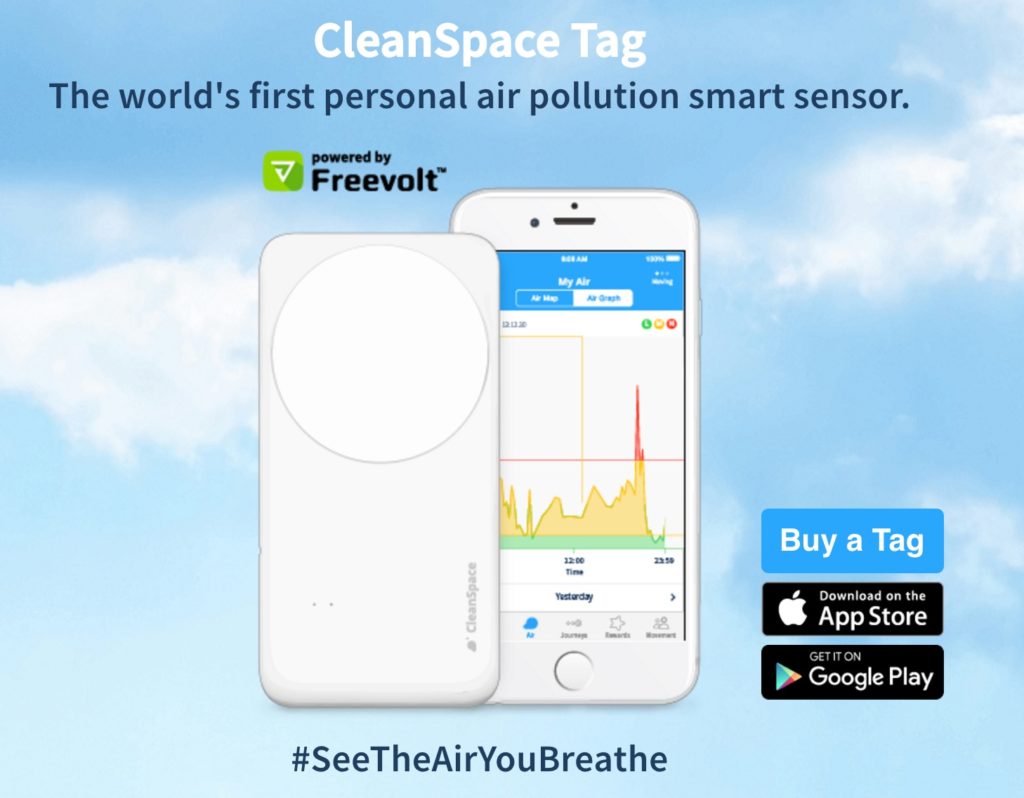
CleanSpace Tag
CleanSpace
The CleanSpace Tag is a portable air pollution sensor that enables people to track their personal pollution exposure and what they are actually breathing in, in real-time. The tag connects to a smartphone via Bluetooth and sends carbon monoxide levels to the CleanSpace app. The air quality data is then anonymised, aggregated and combined with data from all the other Tags across the UK.
Citizen Sense
Citizen Sense
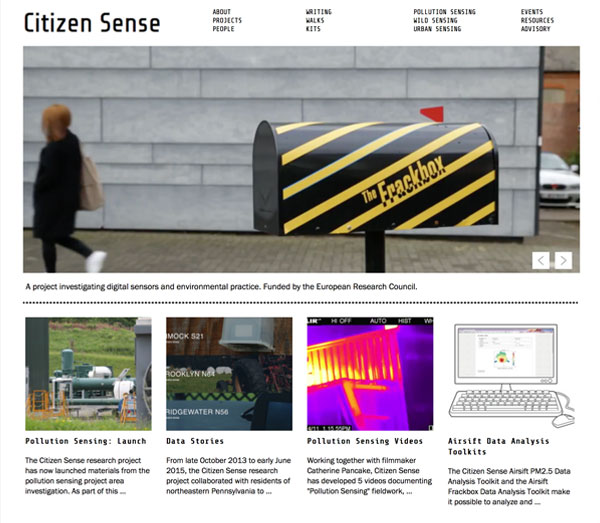
Citizen Sense is a project using portable air quality monitors to monitor pollution levels. The Citizen Sense website is an excellent source of information on the use of sensors for environmental monitoring. An important finding from the Citizen Sense project is that simply providing sensors is not sufficient for increasing citizen engagement and activity. More from the Citizen Sense website.
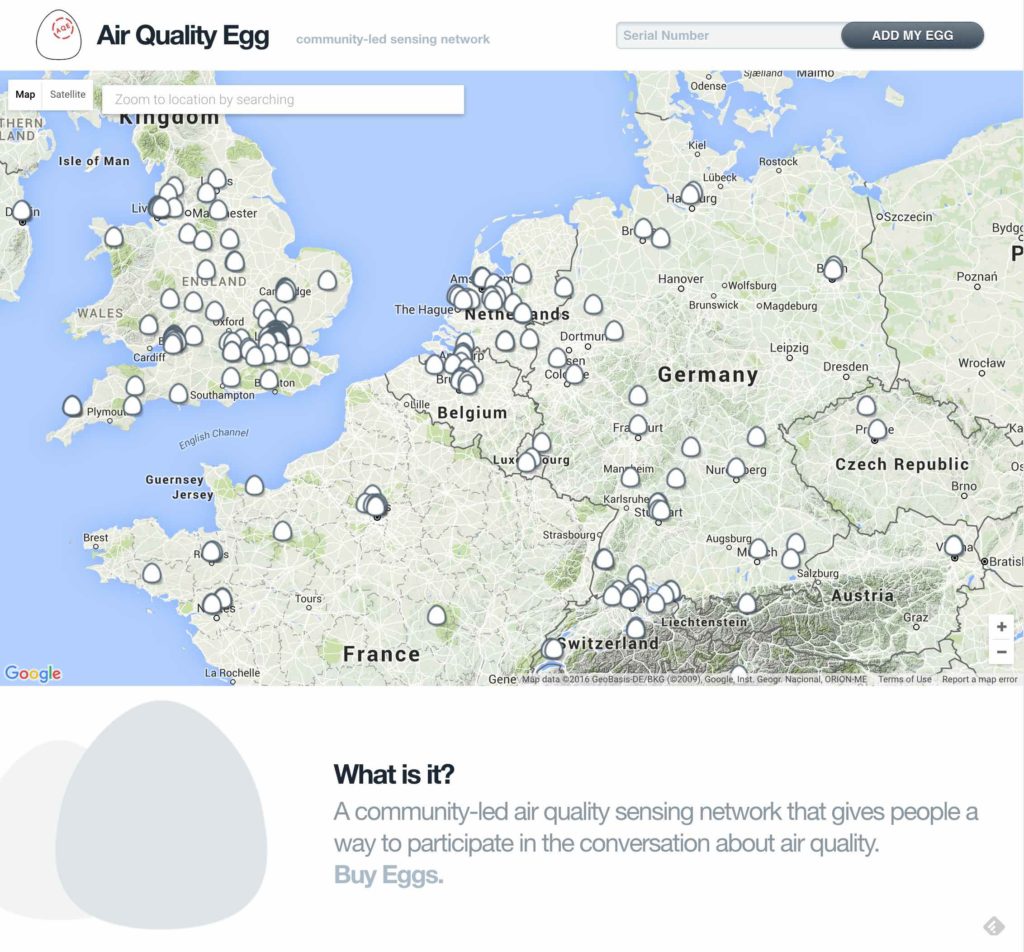
Air Quality Egg homepage with map of sensor locations.
Air Quality Egg
The Air Quality Egg is a sensor system designed to allow anyone to collect very high resolution readings of NO2 and CO concentrations outside of their home. These two gases are the most indicative elements related to urban air pollution that are sense-able by inexpensive, DIY sensors.
Air Quality Egg also supports a community-led air quality sensing network that gives people a way to participate in the conversation about air quality.
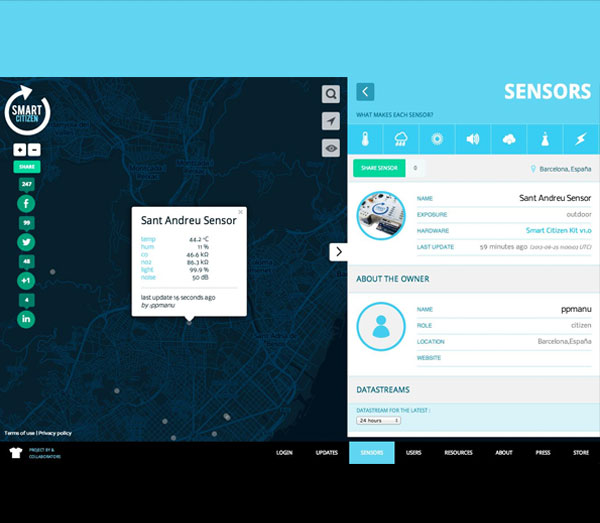
Smart Citizen environmental data from Barcelona.
Smart Citizen Sensor
The Smart Sensor is an environmental data sensor that collects data on: air composition (CO and NO2), temperature, light intensity, sound levels, and humidity.
The crowdsourced data is available at: www.smartcitizen.me … the figure on the left illustrates data from a sensor in Barcelona.
Here’s a link to my smart citizen sensor in Neubau Vienna.

Bike mural at Antwerp Brasserie De Pelgram (great food & drink) by Nathalie Hunter.
Mobile Air Quality
Several cities are experimenting with adding sensors to bikes or buses, some examples:
- Wearable sensors to measure air quality are being tested at Columbia University by Professor Darby Jack. Read more on Next City: Wearable Sensors Will Measure How Much Air Pollution City Cyclists Inhale.
- Next City article: EPA Scientist: Tools That Let Everyone Measure Air Pollution Are a “Game-Changer”
- BREATHE project tested mobile air quality sensors in Barcelona
- Dublin Ireland has installed air quality sensors on 20 courier bikes as part of the CitySense Project
- Malaga Spain is working on adding air quality sensors to buses as part of the CIVITAS 2move2 project: Dynamic Air Quality Management.
- Antwerp Belgium is working on a project to monitor air quality via bike and create maps that show local air quality.
References: Environmental and Air Quality Sensors
Can we rely on DIY air pollution sensors? an article by Richard E. Peltier, Associate Professor of Environmental Health Sciences, University of Massachusetts, Amherst; published in The Conversation, 2 December 2016. This is a good summary of the issue and presents recommendations.
Can you crowdsource water quality data? an article by Pratibha Mistry on The World Bank’s Water Blog (13 December 2016) … summarises some recent academic research and provides a good overview of issues surrounding sensor data collected by residents.
Blog Posts: Environmental and Air Quality Sensors
Transport Data – Challenges and Opportunities
Getting Smart on Data: Challenges and Opportunities for Transport Authorities from Emerging Data Sources was produced by the Urban Transport Group and presents results of an emerging data catapult meeting held in May 2016. The report presents very helpful and interesting information.
DIY Street Activism Groups
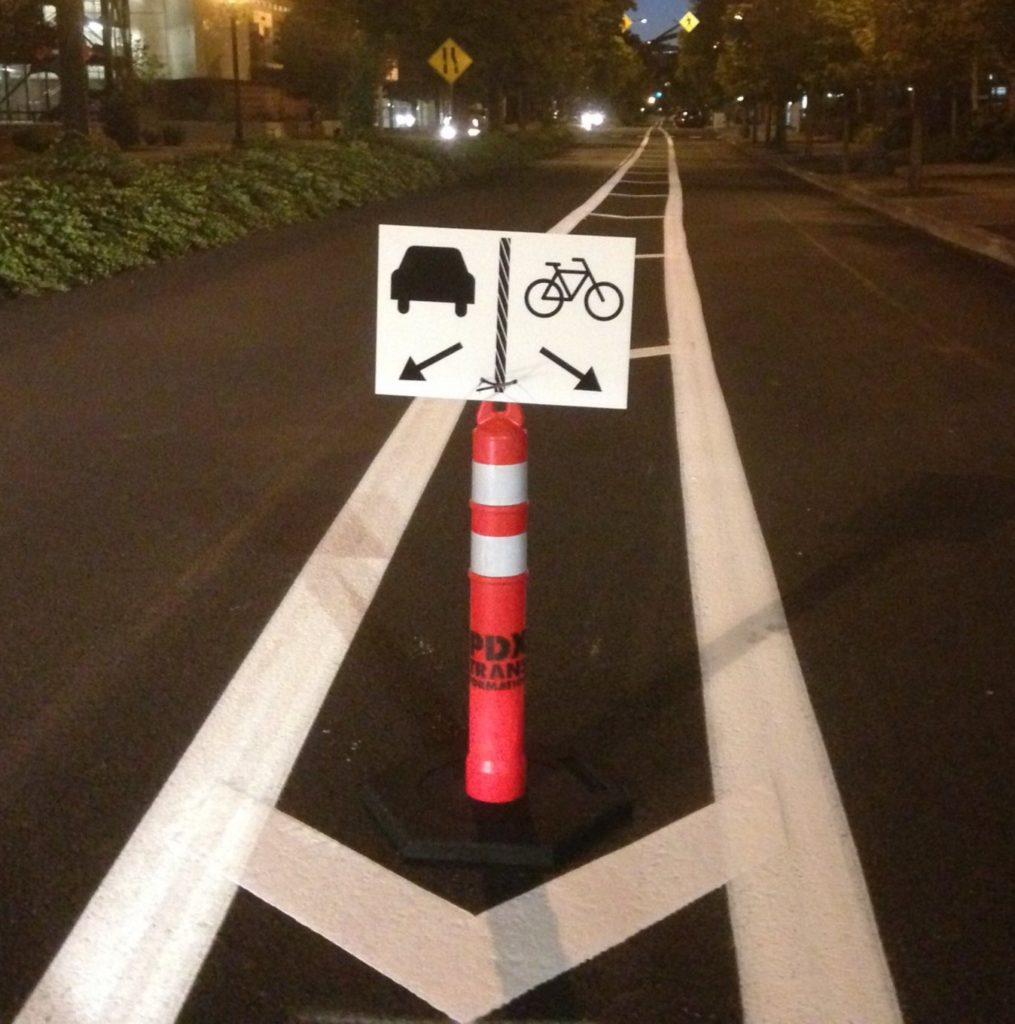
This post provides links to independent groups making DIY transport improvements to improve pedestrian and bicycle safety, and articles about their work. I’ll try to keep it updated, but feel free to add more in the comments. San Francisco – SFMTrA SFMTrA website Building DIY Bike Lanes as a Form of Activism, John Metcalfe, The […]

Making Citizen-Generated Data Work
Our Analyse page describes ways to crowdsource data analysis and collection. Here’s an interesting post from the Open Knowledge International Blog about a new report on the subject: The report “Making Citizen-Generated Data Work” asks what makes citizens and others want to produce and use citizen-generated data. It was written by Danny Lämmerhirt, Shazade Jameson, and […]

Action: Tactical Urbanist’s Guide to Materials and Design
The Street Plans Collaborative published the Tactical Urbanist’s Guide to Materials and Design it’s a guidebook on how urban residents can act to create streets and public spaces that are safe and accessible for everyone. Good examples of tactical urbanism and organisations implementing these projects (e.g., San Francisco’s SFMTrA) are on our Act! page and Streets page. […]